
Sitemap
A list of all the posts and pages found on the site. For you robots out there, there is an XML version available for digesting as well.
Pages
About Me
About me
Posts
Mastering o1js on Mina: Four key strategies for secure development
Published:
For the original (and properly formatted) publication, see Veridise’s post on medium.
Highlights from the Veridise o1js v1 audit: Three zero-knowledge security bugs explained
Published:
For the original (and properly formatted) publication, see Veridise’s post on medium.
Deploying and Debugging Remotely with Intellij
Published:
In this blog post I will show you how to sync an Intellij IDEA project with a remote server (called deploying the project to a server), and how to debug remote runs of that project.
Denali: A Goal-directed Superoptimizer
Published:
This blog post was written for Dr. James Bornholt’s CS 395T: Systems Verification and Synthesis, Spring 2021. It summarizes the context and contributions of the paper Denali: A Goal-directed Superoptimizer, written by Dr. Rajeev Joshi, Dr. Greg Nelson, and Dr. Keith Randall.
portfolio
Meshmode interoperability with firedrake
Mesh and function conversion between the meshmode and firedrake libraries 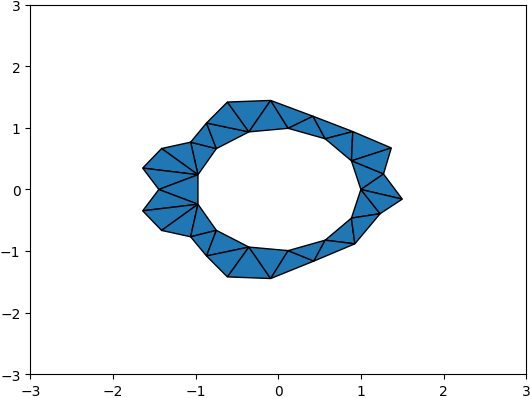
Bricks
Generate portable, high-performance code in high-dimensional settings via data layout transformations
Cortado
Automatic implicit monitor synchronization
Field Emulation Proofs
Z3 proofs of soundness for field emulation in ZK-circuits
Veridise Audit Reports
Exciting/interesting (public) audits I performed at Veridise
publications
Augmented Hilbert series of numerical semigroups
Published in Integers, 2019
Several new explicit formulas for certain augmented Hilbert Series measuring maximal and minimal factorization lengths for all numerical semigroups.
Recommended citation: Glenn, Jeske and O'Neill Christopher and Ponomarenko, Vadim and Sepanski, Benjamin (June 3, 2019). "Augmented Hilbert series of numerical semigroups." Integers 19 #A32.
Finite Elements for Helmholtz equations with a nonlocal boundary condition
Published in SIAM Journal on Scientific Computing, 2021
A new nonlocal boundary condition for exterior Helmholtz problems along with the software infrastructure to express these boundary conditions in Unified Form Language
Recommended citation: Kirby, Robert C. and Klöckner, Andreas and Sepanski, Benjamin.(2021). "Finite Elements for Helmholtz Equations with a Nonlocal Boundary Condition." SIAM Journal on Scientific Computing, 43(3), A1671-A1691.
Maximizing Performance Through Memory-Hierarchy Driven Data Layout Transformations
Published in MCHPC 2022: Workshop on Memory Centric High Performance Computing at SC22, 2022
Extend the Bricks framework to optimize high-dimensional code through data layout transformation
Recommended citation: B. Sepanski, T. Zhao, H. Johansen and S. Williams, "Maximizing Performance Through Memory Hierarchy-Driven Data Layout Transformations," in 2022 IEEE/ACM Workshop on Memory Centric High Performance Computing (MCHPC), Dallas, TX, USA, 2022 pp. 1-10. doi: 10.1109/MCHPC56545.2022.00006
Synthesizing fine-grained synchronization protocols for implicit monitors
Published in Proc. ACM Program. Lang. 6, OOPSLA1, 2022
Automatatically implementing fine-grained explicit synchronization protocols from an implicit monitor specification using formal methods
Recommended citation: Kostas Ferles, Benjamin Sepanski, Rahul Krishnan, James Bornholt, and Işil Dillig. 2022. "Synthesizing fine-grained synchronization protocols for implicit monitors." Proc. ACM Program. Lang. 6, OOPSLA1, Article 67 (December 2022), 26 pages. https://doi.org/10.1145/3527311
talks
Augmented Hilbert series of numerical semigroups
Published:
Presented at the AMS-MAA-SIAM Special Session on Undergraduate Research at the 2018 Joint Mathematics Meetings in San Diego, California, funded by an MAA Travel Grant for Undergraduates. This was joint work with Christopher O’Neill, Jeske Glenn, and Vadim Ponomarenko from the 2017 SDSU REU, presenting new explicit formulas for augmented Hilbert series that measure factorization lengths in numerical semigroups. A weighted Euler characteristic of an associated simplicial complex is a key ingredient in several of the formulas.
Nonlocal UFL: Finite elements for Helmholtz equations with a nonlocal boundary condition
Published:
Presented at the FEniCS 2021 Conference (slides, abstract, and recording), joint work with Dr. Robert Kirby and Dr. Andreas Klöckner. This work introduces nonlocal boundary conditions for exterior Helmholtz problems that are exact (rather than approximate), relying on layer potentials evaluated via fast multipole methods. Integration of the layer potential library pytential with Firedrake allows these boundary conditions to be expressed naturally in UFL.
Maximizing Performance Through Memory Hierarchy-Driven Data Layout Transformations
Published:
Presented at MCHPC 2022 at SC22 in Dallas, Texas. High-performance stencil codes are typically tuned by transforming loop structure, but this work takes a different approach: the Bricks library improves performance by transforming data layouts to match the memory hierarchy instead, enabling significant speedups for structured-grid computations without manual code restructuring. This was joint work with Dr. Tuowen Zhao, Dr. Hans Johansen, and Dr. Samuel Williams at Lawrence Berkeley National Laboratory; slides here.
Synthesizing Fine-Grained Synchronization Protocols for Implicit Monitors
Published:
Presented at OOPSLA 2022 at SPLASH 2022 in Auckland, New Zealand. Writing correct fine-grained synchronization code for concurrent programs is notoriously hard and error-prone; this work presents a synthesis approach where, given a declarative specification of a monitor’s intended behavior, we automatically synthesize the correct synchronization protocol, eliminating a whole class of subtle concurrency bugs. This was joint work with Dr. Kostas Ferles, Rahul Krishnan, Dr. James Bornholt, and Dr. Işil Dillig.
ZK 360 Panel – Future of ZK
Published:
Panelist on the “Future of ZK” panel at ZK 360 during Consensus 2023 in Austin, Texas. The panel brought together builders and researchers to discuss where zero-knowledge proof technology is headed, and I represented the security and auditing perspective — speaking to practical challenges and risks in real-world ZK deployments. See the recorded video here.
AuditHub: A Platform for Professional Blockchain Audit Firms
Published:
Presented at DeFi Security Summit 2025 in Buenos Aires, Argentina. AuditHub is a platform for professional blockchain security audit firms that provides clients with transparency into the audit process while automating common audit workflows — managing findings, reports, and communications in one place to raise the overall quality bar for blockchain security engagements. This was joint work with Dr. Kostas Ferles and the Veridise team.
Who Pays for Security Audits, Bounties, and Incentives
Published:
Presented at ETHDenver 2026 in Denver, Colorado. Security audits and bug bounties are essential to blockchain safety, but who actually pays for them, and do the incentives align? This talk examines the economics behind security reviews: who bears the cost, how protocol teams decide what to spend, and how misaligned incentives between projects, auditors, and whitehats can leave critical vulnerabilities unfound — and what better incentive structures could look like. See the recorded video here.
teaching
Upward Bound Program
Mathematics Tutoring for the Upward Bound Program, Waco/University High Schools through the Waco ISD and ESC Region 12, 2019
The Upward Bound Program is an initiative by the U.S. Department of Education for “high school students from low-income families; and high school students from families in which neither parent holds a bachelor’s degree.” The goal of this program is “increase the rate at which participants complete secondary education and enroll in and graduate from institutions of postsecondary education.” I worked as a paid tutor in general mathematics/physics as well as for the math/science portion of the ACT and SAT tests.